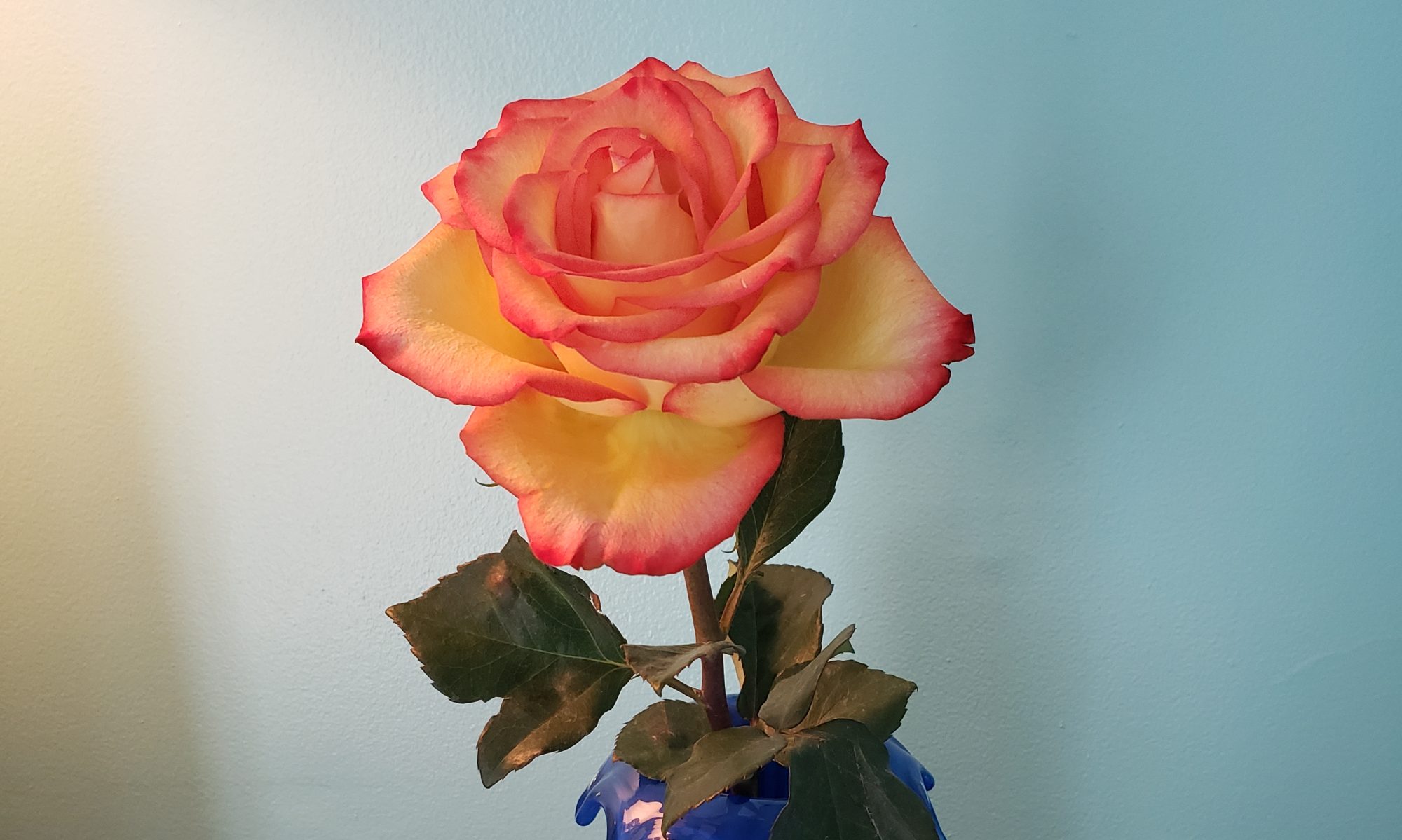
The Last Rose of the Season

I have some knockout rose plants by my house. They’re not fancy, just cheap hybrids, but every year they produce beautiful flowers for me.

This year, in November, when everything was going dormant. the one closest to my door suddenly decided to produce a flower. I made a big deal about it – roses in November, The Last Rose of the Season, etc. I picked it and put it in a vase, and when it began to wilt I hung it up on the wall to dry.

Then, the rosebush made ANOTHER flower in December. It’s wilting right now in the front bed, in the most perfect “seven for beauty that blossoms and dies” dramatic pose.

And what I am taking from this is: There is no guaranteed Last Rose of the Season. Even something that you might think is final, is the end of all things, might not turn out to be.

And yes, it’s important to cherish those Maybe Lasts. When my daughter was in preschool, I thought often about “is this the last time I’ll be able to pick her up?” Children grow. I’m not a power lifter. There was, indeed, a last time.

But we never know exactly which one will be the Last. So cherish those moments; but never give up hope just because you think it’s the end.

I know this is contradictory, but contradictions are just the nature of the world, like roses in December.

(I’ve written and deleted about five paragraphs’ worth of Discourse about whether “nature” includes manmade things, and then I decided: let’s not. This is “nature” in the sense of “reality,” not in the sense of “a human didn’t influence this.” Humans are part of nature.)

Anyway. My point in all this is: Keep hope alive. Don’t give in to the despair. Allow the world to surprise you, and to be wacky and obstinate and uncaring about social or horticultural norms.

There is no Last Rose. There is always another.
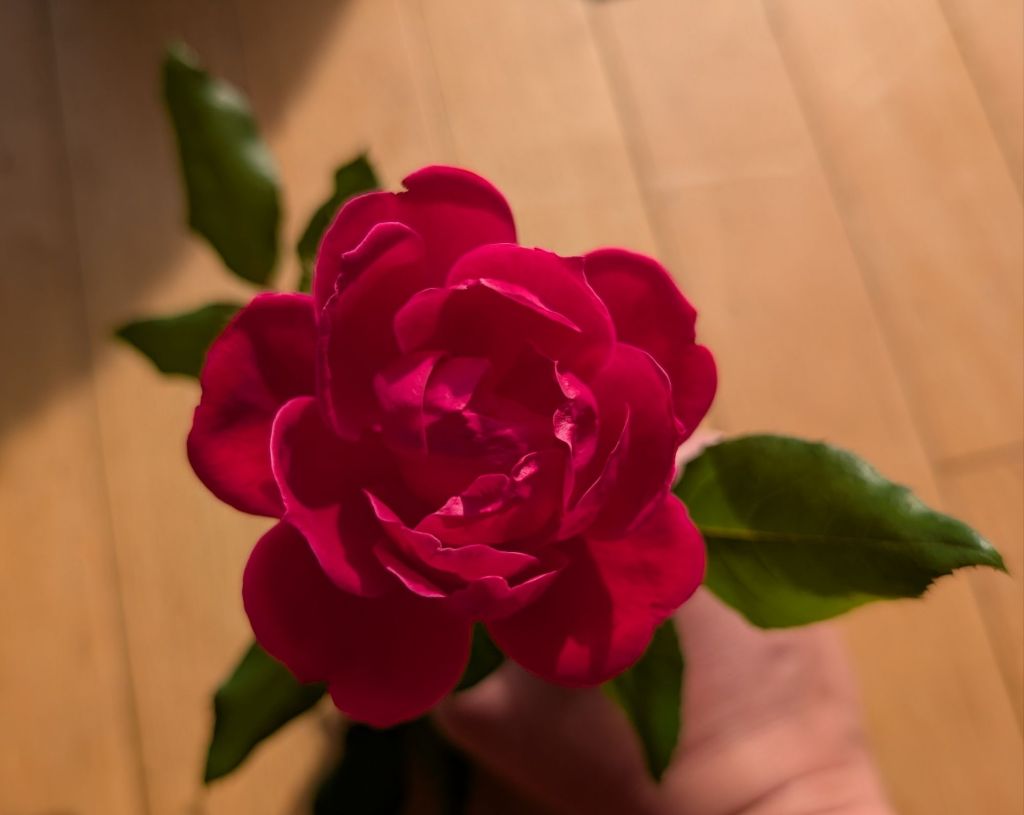
The dramatic November Rose

Bonus! Songs featuring roses!

“The categories were made for man, not man for the categories”

Many years ago, my friend shared this Slate Star Codex essay with me. It really crystallized a lot of my feelings around the concepts of trans rights and how ultimately, we should be able to be good friends and neighbors to trans people even if we don’t understand them on a deep fundamental level.

It may not be the full-throated “how dare anyone believe anything else” defense of trans rights that many might prefer; but I actually find it more compelling for that very reason. (And it’s okay if your mileage varies on that. It’s not personal for me in the way it is for many of you.)

Give it a read.

Being a cable guy

This essay was very poignant.

https://www.huffpost.com/entry/cable-tech-dick-cheney-sex-dungeon_n_5c0ea571e4b06484c9fd4c21

It’s the kind of thing that would have completely changed my perspective if I had read it in 2007, because I simply was not exposed to this kind of job back then. Not that I am a lot now, but, I’m at least a little better informed.

It is good for growing empathy for people in low wage jobs, people on disability, people with addictions.

Friendship means showing up

I have SO MANY FEELINGS about this.

https://rojospinks.substack.com/p/the-friendship-problem

Thought 1

You know, I have better luck with friendships where it’s maintained via a group chat. That way, even if I am busy, other people still answer each other, and I can jump in to the conversation when I have the spoons.

Thought 2

And so people have easily 1000 virtual friends, but no one they can ask to feed their cat.

I HAVE BOTH AND IT’S MAGICAL.

Thought 3

“place-based friendships” – this sounds like Third Places but also, yeah, friendship is what happens when you Show Up.

Thought 4

People outside the constraints of modern western capitalism


Call a spade a spade. This is the knowledge economy. This (moving away from your support system) is how the knowledge economy WORKS. It’s not capitalism that’s the problem; it’s a world where you move to where the jobs are, rather than working whatever job and staying in your home town forever.

But, with remote work…maybe it doesn’t need to? IDK.

But the alternative is we all work at the one textile mill in town. Either you move to where the opportunities are, or you stick to the opportunities available in the town where you were born.

Would I still be happy, if I were a schoolteacher and attended the local Methodist Church every Sunday? Quite possibly. Or I could be clawing down the yellow wallpaper.

Thought 5

The best thing you can do to prepare yourself for climate change is live in an area with a high degree of social trust.


YES THIS OMG.

This is what I tell people who are like “I need to move to get away from climate change” – babe, you already live in the Piedmont, and the best prep is knowing and trusting your neighbors.

Thought 6

And this comment on the original post is what I am talking about when I get tetchy about Stardew Valley working out in real life:

Living now in a small farming town in New England after being a global nomad all my life, I realize that lots of Americans have had that stable interconnectedness of community that I never experienced in cities and suburbs. Town government, church, volunteer Fire & Rescue, annual festivals etc all require hours of interaction with fellow townsfolk. A barn fire or loose animal rallies neighbors’ help and covered dishes are brought to the sick or grieving. Problem is, not many people under 70 are carrying on any of this. The younger generations have moved out or do not participate. It took a few years but now I know that behind the Norman Rockwell scenes, a lot of these folks despise each other. They smooth things over and show up to the raffle or the funeral anyway because of a sense of duty and fear of social censure, sentiments lost in more individualistic, anonymous cities and suburbs. I admit to plunging in as a newcomer only to find that the busybodies who run everything want my labor, but have their own friend and family circles and are not open to outsiders for close friendships. They bonded long ago over babies and can’t understand my life. Conformity seems to be the entry fee for most communities, always a challenge for free thinkers. No tidy lesson I’m afraid, just another perspective on the struggle for connection in our atomized times. Thanks for your thought provoking piece!

“Conformity seems to be the entry fee for most communities.” Yws. Consider the etymological roots of those words: both “conformity” and “community” carry an original meaning/connotation of “togetherness.”

It’s important to allow for non-conformity in general; being able to express yourself is an important part of self-actualization. But bear in mind that that’s just the tip of Maslow’s pyramid; if you don’t have the base layers, nothing else will matter because you’ll be dead. This isn’t intended to excuse communities that exile people over stupid stuff; but I think it does, at least, explain the emphasis on conformity for a lot of communities.

Anyway. Go read the other post. It’s good.

Essay: The Crisis of Gender Relations

My friend sent me this essay today, and it’s very good.

https://www.liberalcurrents.com/the-crisis-of-gender-relations/

What this has meant for women is a society in which they have options outside the patriarchal bargain. Simply working for a wage is enough to provide the security that once husbands exclusively controlled. Or, to put it more intuitively: the rise of two-income households isn’t a result of economic hardship. It’s a result of economic growth.

Go read it.

On groups and dyads

A variety of painful circumstances in my life recently have crystallized out a thought, for me: as much as we want a Group to be a cohesive unit, the group is only as strong as the strength of its various dyadic friendships.

When a group that had been constructed around one central Hub Person implodes, the continuance of the group is dependent on whether any of the Spoke People had actually formed individual (“dyadic”) friendships with each other. Without those interconnected friendships, the group would wither away without its Hub. (And maybe that’s why some Hubs feel threatened when they’re no longer the gatekeepers of access to the other friends?)

And when a large enough group (40 or so people) forms, not everyone will be as close to everyone else in that group; so it’s up to the individuals to build (or not build) their friendships with one another. If one person is having a crisis and reaches out, I am finding that sometimes, a larger group is *less* likely to respond. It’s the small six person chats that get things done for each other; or it’s an existing dyadic friendship within the larger circle that recognizes the need and answers it.

Is this the Bystander Effect in action? Are the larger groups prone to feeling too helpless to help? Someone else will do it?

Is this an effect of geography? Some of my Discords are pretty geographically dispersed, and I think that makes it harder (though not impossible) to build those sturdier connections.

It can also be hard to know what/how someone needs help. With closer individual bonds, there’s more of a chance that the person helping will actually help, versus accidentally making things worse. (I know that’s a thing for me as well: I’ve made things worse so often.)

But I just had an absolutely terrible week, and all kinds of people came to my rescue; and I am so grateful. And I witnessed someone else leave a group because they weren’t getting the support they needed, and my heart aches for them; but we were never directly close with each other, either, so I felt too distant (geographically and emotionally) to help. So it goes.

But anyway, my point in all this rambling is: If you are in a large friend group, make sure you aren’t neglecting the individual connections with individual people. In the end, “The Group” is a legal fiction. The people that help you move are the real individual humans that you can bond with, or not, as life takes you.

But try to take care of each other. Yes, The Village is built on unpaid labor. It’s transactional even though it’s not tracked, or shouldn’t be tracked, because Village Support is about having help with specific concrete actions that need doing.

I don’t know. I’m rambling and tired. But just. Look for the helpers; and be the helpers, when you can.