Is the Purpose Of a System What It Does?
Or is the purpose of a system what the people who designed it said they wanted it to be?
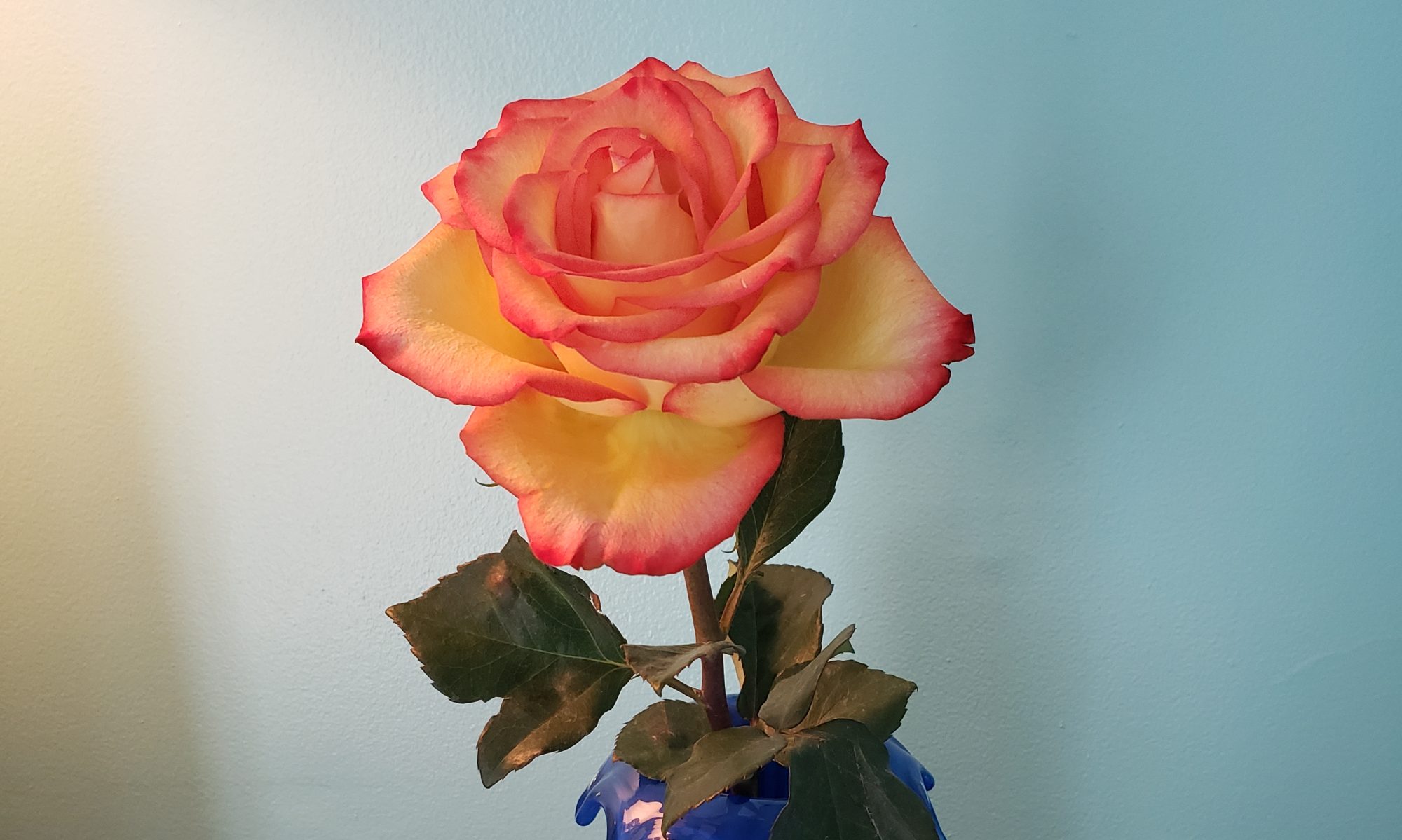
Ten pounds of personality in a five-pound bag
Is the Purpose Of a System What It Does?
Or is the purpose of a system what the people who designed it said they wanted it to be?
Yesterday, I went to a local board game store’s big yard sale event, and had some random conversations with people. After mistakenly trying to pick up one guy’s Mystic Vale because I thought it was still unclaimed (he was just resting his arms 😂 that box was big!), he pointed me to a game with similar mechanics, but a space theme instead of a fantasy theme.
I said “Thanks, I appreciate it, but I usually go for vibes over mechanics” and he nodded like he understood exactly what I meant.
Because here’s the thing: I do enjoy different types of game mechanics! Some more than others. In my board game group, I’m infamous for disliking trick takers, for example.
But the thing that makes me LOVE a game isn’t the mechanics. I enjoy Arcs, and will willingly play it with my friends, but I actively seek out Root games (when I have a spare full afternoon, which is, granted, not that often).
But sci fi games aren’t what fill my shelves. Cozy fantasy or nature theming is more my jam.
This feels similar to how my friend group somehow settled on only ever playing Century Golem, even though Century Spice Road is an identical game. There’s just something cooler about mining magical gemstones to power ancient guardians than there is about becoming a really good merchant. (Although I’ll always play a game or two of Jaipur!)
So. Vibes vs Mechanics. Which one are you?
https://yourlocalepidemiologist.substack.com/p/vitamin-a-and-measles-what-the-data
This post, by Your Local Epidemiologist, makes a good point about people gravitating to nutrition and other solutions to infectious disease, rather than vaccination, because they want to feel a sense of control over their environment. It’s very difficult and scary for humans to accept the randomness inherent in the natural world; we’d rather have a way to say “I am controlling what happens to me,” and controlling what food goes into your body is a natural extension of that.
Vaccines are abstract (and still a numbers game; even 99% efficacy is still not 100% efficacy), and they don’t provide the soothing effect that “actively choosing your food every day” would provide.
https://en.wikipedia.org/wiki/Just-world_fallacy
The Just World Hypothesis is comforting for that same reason of control. We want to feel like good things happen to us because we made good decisions; bad things happen to others because they made bad decisions; and bad things happen to us for reasons we could not control. Nobody wants to confront the harsh reality that sometimes, bad things can happen even to people who made all the right decisions.
Anyway, go read the YLE essay. It’s very good.
This Instagram reel highlighted a difference I haven’t been able to put into words before: Internal vs External Processing.
I know I process things by talking them out. I used to joke that I have an “external dialogue” rather than an internal monologue. But not everyone works that way.
Like the commenter said: this is one of those Differences that should be brought up in couples therapy and premarital counseling. Figuring this kind of thing out first can make solving the other problems exponentially easier.
I’ve been thinking about the Geek Social Fallacies again, and about Ostracizers Are Evil (fallacy #1).
This Reddit post summarizes it pretty well.
https://www.reddit.com/r/AbuseInterrupted/s/syogLYSwkV
It’s not wrong or evil or Just As Bad As The Bullies to ask someone to leave when they are being obnoxious.
People can, and do, learn and change and grow. But they’ve gotta DO those things.
And neurodivergence isn’t really an excuse; sometimes it’s barely even an explanation. Like they say about trauma: trauma isn’t your fault, but healing is your responsibility .
I’ve had a couple young people side-eye my use of “skeet” for micro blogs posted on BlueSky.
To them I say: this feeling you have right now? I spent decades feeling that about the word “cyber.”
And now I wonder what the next unintentionally horrible word will be?
Lately, I’ve felt very weird asking people how they are doing. Everything is terrible and my. County is one failed court injunction away from breadlines.
So instead of “How are you doing,” I’ve started asking people if they’ve drunk water recently, as a way of expressing that I care about them and want to make sure they’re taking care of themselves too.
And I suddenly realized that I just reinvented the Chinese greeting 吃饭了吗,”have you eaten (rice)?” (Chi fan le ma, pronounced roughly as “chur FAHN luh muh”.)
So. 喝水了吗? Have you drunk water? (“Heuh shway luh muh”.)
Not even gonna try to translate “don’t shrimp,” though.
I heard this quote from E.L Doctorow for the first time this week:
“You can only see as far as your headlights shine, but you can make the whole trip that way.”
A letter writer in this week’s Hax chat drove me absolutely bananas.
She writes that “our work is equally valuable” – but she doesn’t indicate that she understands the multiple Senses of the word “value.”
Not all work is Remunerative.
Not all work is Emotionally Fulfilling.
These two things are orthogonal to one another. A job that puts a roof over your family’s head is Valuable-like-Remunerative. A job or hobby that makes you happy is Valuable-like-Fulfilling.
The LW needs to understand that she has an obligation to ensure that her children do not go homeless. That doesn’t make her hobby work any less Fulfilling or whatever, but it does mean that the fact that her hobby work is not Remunerative is a HUGE FUCKING ISSUE.
Here’s the text. I’ll go get the full link in a bit.
The end of our beautiful work paradigm
Guest
12:55 p.m.
Dear Carolyn,
My husband and I have always had an understanding that our work is equally valuable, even though his work is more traditional and brings in consistent benefits/salary, while mine is a balance of occasional freelance work that pays and artistic passion projects that usually don’t pay (some years actually costs us money). Getting to the place where we are mutually respectful of each other’s work took years and some therapy to achieve, but until recently we are in agreement that I am just as entitled to dedicate energy to my work as he is to his. (This would come up, for example, in balancing childcare and housework responsibilities—I get equal time to work even if the money it brings in isn’t equal.)
The problem is that with the looming federal overhaul, my husband’s work is more important and more vulnerable than ever. We’re okay for now, but we had a Come to Jesus talk the other day where he suggested (and I agreed) that there may be a point where we have to live on savings. If that happens, he says, we will need to both prioritize paid work, and we will both have to do whatever is possible to keep him employed (even if it means I no longer get my equal time).
As much as I understand why this has to be, my whole soul jumps up in rage against it. Carving out my weekly work hours was such a hard-won victory and one I feel defensive of with everyone outside my home, and now I have to go back to fighting for it with my husband too? His answer to that is “But we have to pay the mortgage.” Yes, but this was a beautiful phase and I am so angry that it’s ending. Any advice?
Carolyn Hax
Advice Columnist
You’re entitled to your anger, certainly. But you’re not entitled to dump it on the wrong person just because this is your personal third rail.
If I read you correctly, any compression to your time window for your work — if it happens — will come from forces outside your marriage. So get angry at them, not your husband.
Then find some healthy outlet for your anger so it doesn’t harm you and your husband through corrosion — which isn’t overtly wrong the way blaming him for his job vulnerability would be, but is an insidious problem that’s within your power to address.
This is all “if”; maybe the chaos fairy leaves you alone.
But related to this: The hard work you did to create and defend this arrangement can make protecting it your emotional default even when your husband’s mental health is the valid priority. If you can’t trust him, yourself and the foundation of your arrangement — enough to leave it “unguarded” while you prioritize him through (literally) newsmaking stress and turmoil — then that could create much bigger problems than whether you preserve the structure of your deal.
A deal that, I do want to note, grants 50-50 value to each of your work when yours apparently gives you passion/soul satisfaction and his carries the family. Any soul/passion payoff in it for him? Okay for me to assume not?
Either way, just on the money front: While I cheer the idea of granting equal value to work for the sake of work and not just for what it pays, it does seem as if your husband took on extra mental load in this deal financially.
While you’re waiting to see what happens and still just talking about this, you can — calmly — make it clear that you want any adjustments to be responsive to the moment only and not a permanent ceding of ground that has been so meaningful to you. Or, if you trust him to knwo this already, say out loud that you trust him. But I would save all that for after you convey to him that you will, of course, not leave him to carry ALL the worries of how the family’s bills will get paid if the chaos fairy does visit him.
Right? You will, if it comes to that, do whatever your family needs?
Having promised a few folks a blog post about this resource, I wanted to share this downloadable PDF with all of you.
This is the version I bought. You can get different versions, color or different paper size or similar.
As with many things in my life, I have satisficed with this activity. I haven’t fully completed every item in the document; but I’ve printed out several of the sections, and filled them out to the best of my current ability.
There is also a bound book format of this concept; I believe it has the exact title listed here. You can get it at any major retailer. I thought about getting that one, but I opted for a 3-ring binder, because it makes it easier to include printed-out sheets from my employer’s website and things of that nature.
One thing I did not anticipate in all this is having to shuffle the Friends/Contact Info page around. A close friend severed all ties with my social circle shortly after I started working on this book; crossing out her name on the page felt bad. But at the same time, it serves as a bit of a time capsule for my life at that point. I haven’t reprinted that page.
Some of the stuff here has overlap with the concept of a Butler’s Book: how to contact the utility company, etc. That’s fine. Redundancy is actually good, when you’re talking about critical systems, current zeitgeist notwithstanding.
That’s about all I’ve got for now. I’ll probably add a few more things over time as they occur to me, but this should do as far as summary blog posts go.
 Emilybook