On clothing and consumerism

This tweet resonated pretty hard with me today.

https://twitter.com/sesmith/status/1622296174777729026?s=20&t=Qg-VB8q-Qoj–W1k8G-H0w

I hadn’t ever thought of it in these exact words, but this is basically how I frame my decisions about what to buy.

The phrasing I’ve used in the past is: Yes, I can afford this; but I shouldn’t afford it. (I think I may have heard my parents say that once but I’m not positive.) This attitude has served me well as I transition to a lower household income than what I had before: I’m putting off a lot of household furniture purchases and so forth, because I don’t want to find myself in a position where I am spending money on credit card interest. (That does not spark joy.) Some interest is unavoidable; emergencies happen, mistakes happen, etc. But anything I can do to minimize that helps me feel more comfortable and secure in my life now.

And the positive ethical implications of lower overall consumption are just the icing on the cake.

Financial order of operations

A friend of mine shared this link with me, and I’m really appreciating it right now.

I’m always looking for new ways of thinking about money, and this post highlights one of my own weaknesses: I always tend to go for a mathematical solution, rather than looking at the root emotional causes of what I’m doing. So thinking about what it is I want to be able to do with my money is an important thing for me to step back and contemplate.

Along with that, though, her second point about creating a Descriptive Budget first is something I already love. The first step (or, in her list here, the second step) to taking control of your money is knowing where it all is going.

Steps 3 and 4, emergency fund and employer matching, are also good; though from the title I had expected 4 to be about Lifecycle funds. But I guess that comes later!

Step 5 is interesting. She calls it “pay off then highest interest rates first,” but also talks about the snowball method (pay off lowest balances first). Fortunately, those two things often run together – a credit card balance is likely to be smaller than a car, house, or student loan, and it’s likely to have the lowest rate. So that makes sense.

Steps 6 and 7 are emergency fund and retirement, again. I approve. Then step 9 is about aggressively paying off debts. I like that this comes after establishing baseline financial security first; debt is not a great thing to have, especially if it has high interest, but it’s not evil.

Steps 8 and 10 relate back to Step 1: thinking about what you want again, and then making it happen. Most things in the world come with a concrete price that you can look at and save up for, even if that price is not immediately visible. And prioritizing your dreams and placing them within the context of what you want to do is a great way to make them much more accessible.

In short: I like this financial writer!

Chaos Muppets and Order Muppets

I recently had the delight of discovering this dichotomy in humans: are you a Chaos Muppet or an Order Muppet, and are you yoked to someone like you or someone different from you?

I first heard of it in this Reddit post: https://www.reddit.com/r/AskWomenOver30/comments/zivdeq/does_your_partner_do_this_not_sure_what_to_call_it/?utm_source=share&utm_medium=android_app&utm_name=androidcss&utm_term=1&utm_content=share_button


And here’s the original essay on Slate: https://slate.com/human-interest/2012/06/chaos-theory.html

My toxic trait (as the kids these days say) is that I’m a chaos Muppet who aspires to be an order Muppet. This can sometimes lead to tears.


Frog is an Order Muppet; Toad is a Chaos Muppet.

Rules and Boundaries, cat edition

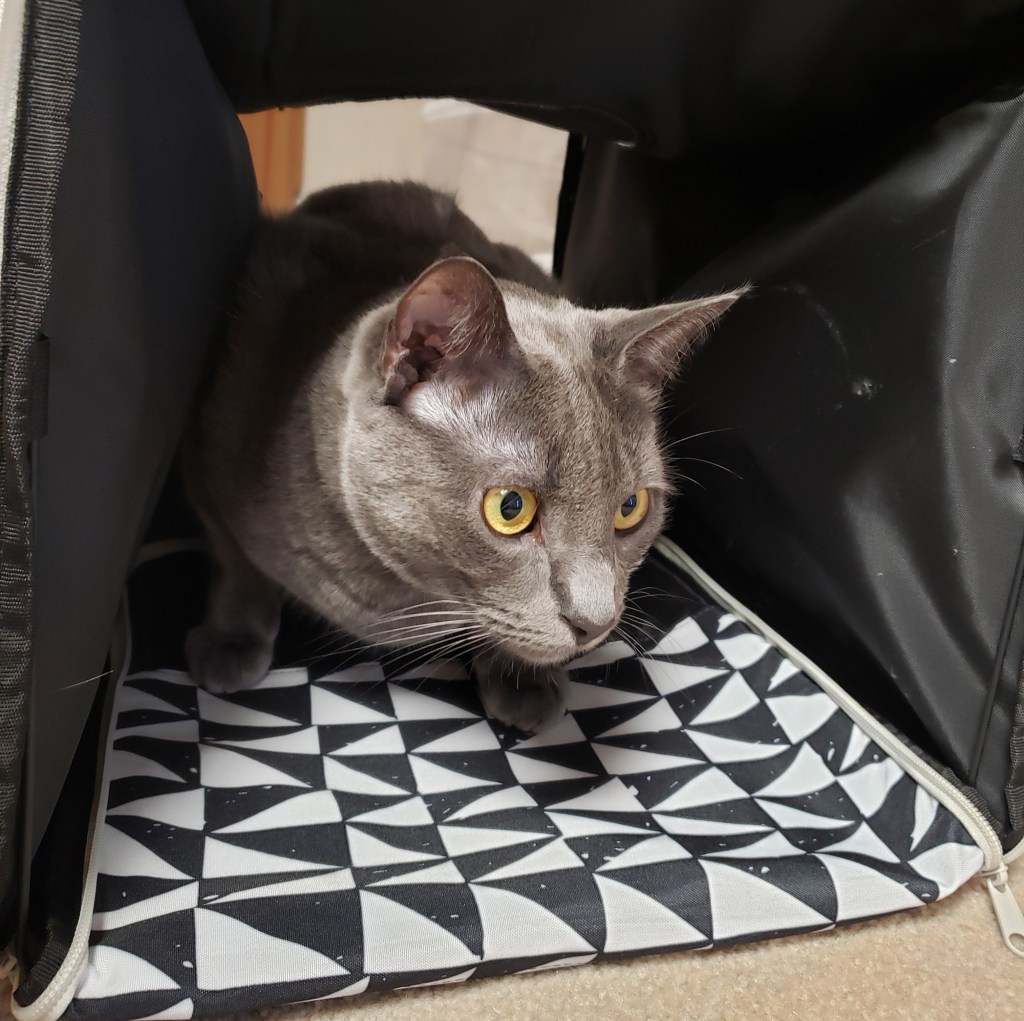
Last night, I accidentally taught my kid about the difference between Rules and Boundaries by using my cat as an example. See, my cat (Cloud, 2M) is a bit of an asshole sometimes. He likes to jump up on my dresser while I’m sleeping and bat things around and make noise. As a result, I’ve started locking him out of my bedroom at night, so that I can have good sleep hygiene (a serious issue for me right now in my life).

So last night, my daughter was like “Why are you punishing him? He’s just being a cat!” And, you know, she’s right! But also, I have the right to sleep without disturbance. So I launched into the explanation that I cannot control Cloud, but I can control what doors are open or closed in my house.

Then, I realized that this was a perfect way to segue into the difference between making rules for someone else versus setting a boundary for your own self!

I emphasized that I cannot control Cloud or his actions myself. I can say โ€stay off the dresser” until I’m blue in the face, but ultimately I’m not the one that controls his actions. What I can control is my actions. I can lock him out of my room in order to be healthy and get enough sleep. That’s within my locus of control.

Then I drew a parallel to a real life conundrum she might face someday: say, dating a person who is a smoker. She can say “You can’t smoke in my house.” She can say “If you smoke, I will break up with you.” But she can’t say “You are not allowed to smoke.” That’s not within her locus of control.

Anyway. I hope this lesson sticks with her as she grows up and makes her own way in the world.


Cloud, in carrier

I also found this video on Instagram, which explains boundaries from the cat’s perspective.

Ethical Clothes

A few recent threads on Twitter have caught my eye, about fast fashion and the ethics thereof.

It makes me think about how I went through a phase where I wanted to slowly transition to only wearing clothes made in America. That never happened, but it was instructive. I bought a couple pairs of $90 sweatpants from American Giant. I still wear them.

That last is part of what Cora Harrington has been saying for a while now: keep wearing your existing clothes. That’s it. Just…wear your clothes. The way you avoid paying slave labor wages is to buy less stuff. It’s not perfect, of course, but it’s the most immediately effective and impactful thing you can do.

I know it’s easy for me to say this. I’ve never cared too much for fashion, and my body size has stayed more or less consistent over the years. I can’t wear my jeans from middle school anymore, but I can wear my jeans from age 29 if I’m doing housework and don’t care if I need to undo the button because I ate too much fiber or something. I’m a straight sized person and yeah that’s one form of privilege. But at the same time, there are no easy answers. Sometimes the best answer is “you can’t have cute ethical cheap clothing because it doesn’t exist.” You can pick two.

But if you rewear clothes, the dollar cost averaging (or whatever you want to call it) of the Not Cheap things actually comes out pretty good.

Free public bathrooms

Major cities should have free public bathrooms, I don’t care if they have to pay janitors to clean every hour, or have an attendant stationed there all the time, or what. It’s just the right thing to do, and a putative use of our tax dollars that benefits *everyone*.

What Ajah are you?

Like many “corporate astrology” determiners, I enjoy the question of “What Ajah are you?” from the Wheel of Time books by the late Robert Jordan (and, lately, the excellent Brandon Sanderson).

I got to talking with a friend today about it – she was hoping that the Brown Ajah we will see in Season Two would have lots and lots of pockets, since they are basically research academics (like her)!

Since my friend so clearly identified with the Brown Ajah, I started wondering: what Ajah am I? Descriptively, I’m probably Blue Ajah, because I am always arguing with people but also trying to understand them. But when I first read the books, I really wanted to be Yellow Ajah – whether this is due to over-identification with Nynaeve or just my nascent need to Fix everything (wrench/ear!), I loved the Healers.

But then! Then we got on the subject of sexual orientations, and all bets were off.

  • All Ajahs: pretty darn Sapphic, given Jordan’s obsession with “pillow friends”
  • Red Ajah: either lesbians or misandrists. We only see the latter in the books, unfortunately, but I have hope that there are some who don’t suck. IDK, maybe Lesbian Red Ajah is just my head canon.
  • Green Ajah: very very polyamorous. The way Jordan treats the Warder/Aes Sedai relationship is weird, though, and verges on consent violations, so this might be a dicey road to go down.
  • Blue Ajah: the canonical Disaster Bisexual
  • Yellow Ajah: is probably a therapist, and will have trouble separating their job from your relationship
  • White Ajah: they always struck me as pretty asexual. Who knows, though?
  • Brown Ajah: probably not interested in sex unless it’s with one of those devices that can, ah, track and record your biometrics during the act.
  • Grey Ajah: who?
  • Black Ajah: see Terry Goodkind

Do more proactive good in the world

1: LeGuin, “We all do harm by being.” 2: Marissa thread.

We all do harm by being.

Ursula K. LeGuin

I’ve been thinking about this a lot lately, and how we have cultural and subcultural constructions of what is harmful, which often bear no resemblance to the truest harms we do every day. I don’t think the vast majority of us โ€” myself included โ€” are equipped to grapple with the very real harm we do by just, say, getting on a plane or heating a house. We prefer to crow loudly about things like not using Spotify anymore due to the J*e R*gan contract. (I specifically chose there a platform I’ve never used and have no opinion about others using. I’m not trying to get too personal in this thread.)

All too often, whatever subculture one is a part of will have very rigid ideas of what is harmful and what its members should refrain from in order to stop them from doing harm. I don’t think these things are pretty much ever meaningful. But the more rigid and meaningless the rules, the more rabidly they’re policed on social media. (I’m truly not subtweeting one group; this is damn near universal.) All under guise of preventing harm. Which is impossible, as Ursula reminds us.

I would like to try to move myself to a different lens, where I’m less invested in stopping whichever of my harms I’ve imagined to be the greatest ones (definitionally subjective anyway) and more invested in choosing to do positive acts that I believe are beneficial to the world. Which in a nutshell would be: much less time worrying about my sins, much more time worried whether I’ve actually done anything purposefully good in a given week. We all do harm by being! But we can choose to also do good. /๐Ÿงต

@ MarissaRae on Twitter

A friend posted this tweet, and I want to write more about it: about how I’ve started trying to document the companies and products that seem genuinely good to their people (even if it’s not all perfect), and so forth.

But for now, I’ll just link to this. The next time you’re anxious about a given shibboleth, instead try to think about one small change you can do to have a positive impact on the world.


Related concept: don’t let the perfect be the enemy of the “adequate and you get to sleep”

Another related concept: don’t let The Discourse fool you into thinking that you, personally, are responsible for doing Zero Harm to the humans and the world around you. You cannot fix a systemic problem with individual solutions. (I know this is not something everyone agrees with. That’s okay. I am stating my opinion on it.)


Nothing you do is enough. Nothing you do will ever be Enough. But that is OKAY. It means you get to decide what is enough, for you. And I just realized that this all clicks into my general philosophy of Cheerful Nihilism, so, there we go!