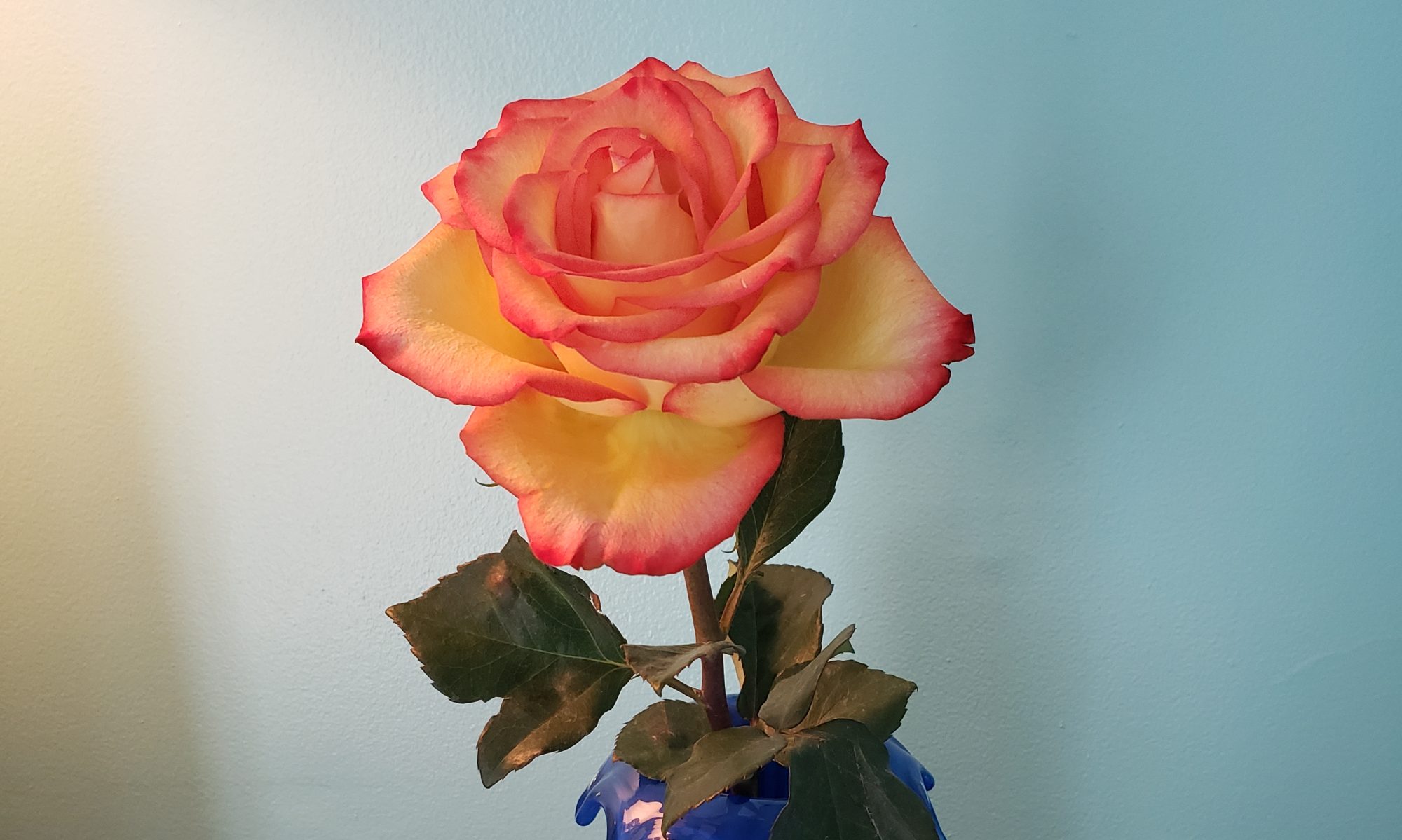
There’s a chain store near me, Wild Birds Unlimited, that used to be a local mom-and-pop shop and still employs many of the same employees even after the original owners retired/sold the store. I like them a lot.
Shopping local: Queen Takes Book
I’ve been trying to buy my physical (paper) books from Queen Takes Book, even if they have to order them, rather than ordering them from Amazon. I’m not doing any kind of complete boycott (I lack both the executive function and the certainty that it would accomplish anything useful); but actively purchasing from a local store is something I love doing.
Community
Lots of thinking about community and small towns this weekend.
Community is a system of mutual obligations and unmeasured transactions. (I stole this line from a friend because it’s true.)
You help people, they help you, on down the line. It doesn’t even have to be a barter economy, just a gift economy.
But in every case: you have to show up. You can’t half-ass this.
A Butler’s Book
In the vein of trying to get my stuff all documented so I have predictable schedules and don’t accidentally forget to change some unknown filter and my house blows up, I’m trying to start really writing down all the details of my household.
At some point a little while ago, I heard about the concept of a “Butler’s Book,” and I really like it. Googling it today found me this blog post and associated Google Doc; I’ll be adapting that to meet my needs and then printing it out.
I also kinda want to start keeping a paper address book again, but with more information than just addresses. Like, birthday/favorite color/fandom/etc. I should look for a template for that, too.
This project goes hand in hand with my “I’m Dead, Now What?” binder.
Dalinar’s speech from Oathbringer
This post contains significant spoilers from the book Oathbringer.
Continue reading “Dalinar’s speech from Oathbringer”Social Time and Normative Time
Despite the fact that I have a lot of trouble being on time to things (probably due to a little bit of time blindness/optimism about how long it’ll take to do stuff), I have a very Normative sense of time: things happen at an established time, and we should attempt to meet that time/deadline to the best of our ability.
My friend told me a while back about another way of viewing time – Social Time. This is the way of thinking about time that’s often assigned a nationality (Moroccan time, Greek time, Island time, whatever), and it’s associated with just accepting that things happen when they happen and not stressing too much about running later than anticipated.
I find Social Time very anxiety inducing; this might be related to the Ask/Guess dichotomy, in that I like to have things clearly defined (even if I fail to meet them). Hard to say for sure.
I also have this Tweet bookmarked from a while ago; let’s see if embeds still work.
https://twitter.com/the_wilderless/status/1578258844605730816?s=20&t=BfpB_R4f5-Hz_SEOHkNY_w
Everybody wants a village, but nobody wants to put in the work
I think this is going to be a macro post, where I come back and add things as they occur to me.
This Slate column
My friend recently linked me to this, and man I got nothing. Just read it.
https://slate.com/life/2024/11/parenting-advice-friends-loneliness-village.html
These comics
I just got a Bluesky account and already the algorithm knows me.
https://bsky.app/profile/pervis.bsky.social/post/3lbqarh4u7k2p
https://bsky.app/profile/spookyforcefrancis.bsky.social/post/3lbshvyhf422b
Some thoughts
If you want people to show up for you, you have to show up for them. Modulo disability, being physically present really really matters. I can’t help my friend move but I helped her pack and purge and can store some of her stuff. I’ve babysat for friends without pay, including overnights, because that’s what friends do when they’re able. And when I was very sick last year, my people showed up for me.
I tolerate a lot of things in my life. I recognize that we can’t always build a village out of picture perfect people that we’ve cultivated like Sims, just like that columnist says. I’ve always been afraid to get close to my neighbors, because what if they’re awful? I’m stuck with them. But: maybe if we get close, they won’t be awful. Or maybe they were never awful to begin with.
For now: I’m just grateful for the friends I do have. Thank you for being with me.
Lobstering is an actual free market?
I just watched this video from the lobster guy. Apparently in Maine all the boats have to be owner operated, and pay for the crew is done by shares of the total boat’s profit. That’s really good, and IMO very fair. More businesses should be run like this.
The “I don’t like what you like” game
This Instagram video is an amazing example of how to converse with someone who doesn’t share your interests!
If you don’t like what someone else likes, that’s okay! Ask them what they like best about it, or talk about it generally, or use the “yes, and” principle to say “oh that’s cool! I like this other thing, myself.”
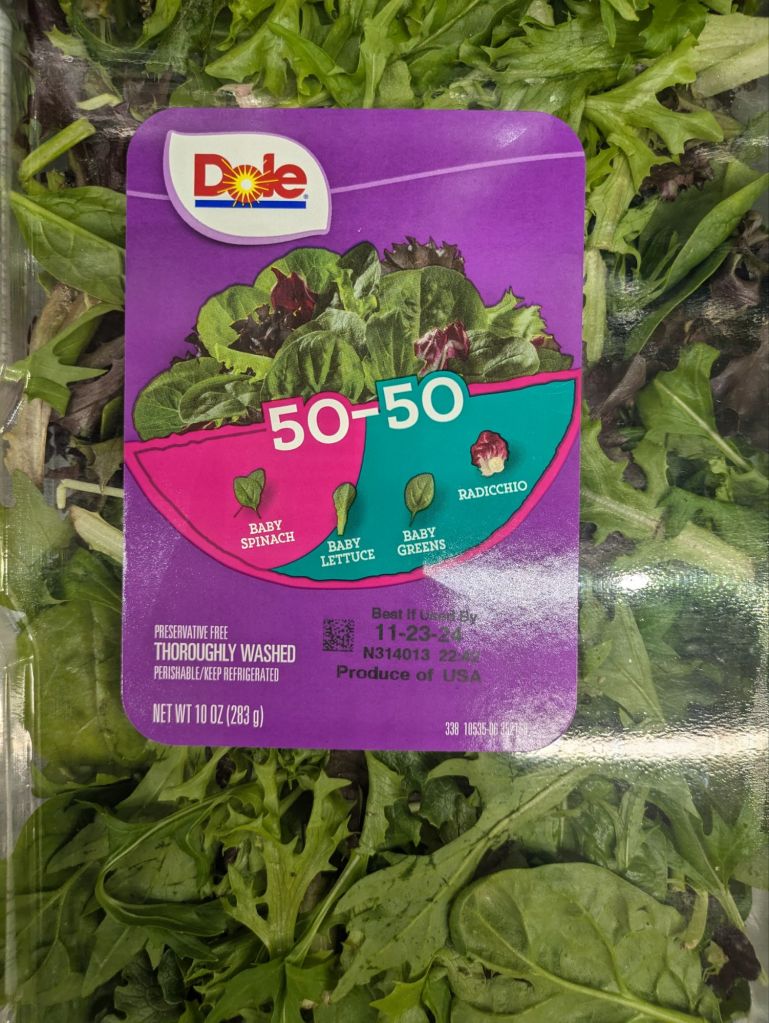
Bad chart design
This package of greens is just baffling. How is it 50/50 of four different greens? And why is the 50/50 geometric shape more like 30/70?
 Emilybook