I only learned about Judy Heumann today, when my friend told me about her passing. This sounds like a hell of a life.
Remember that none of the rights we have should be taken for granted.
Post by Soph J Butler about same.
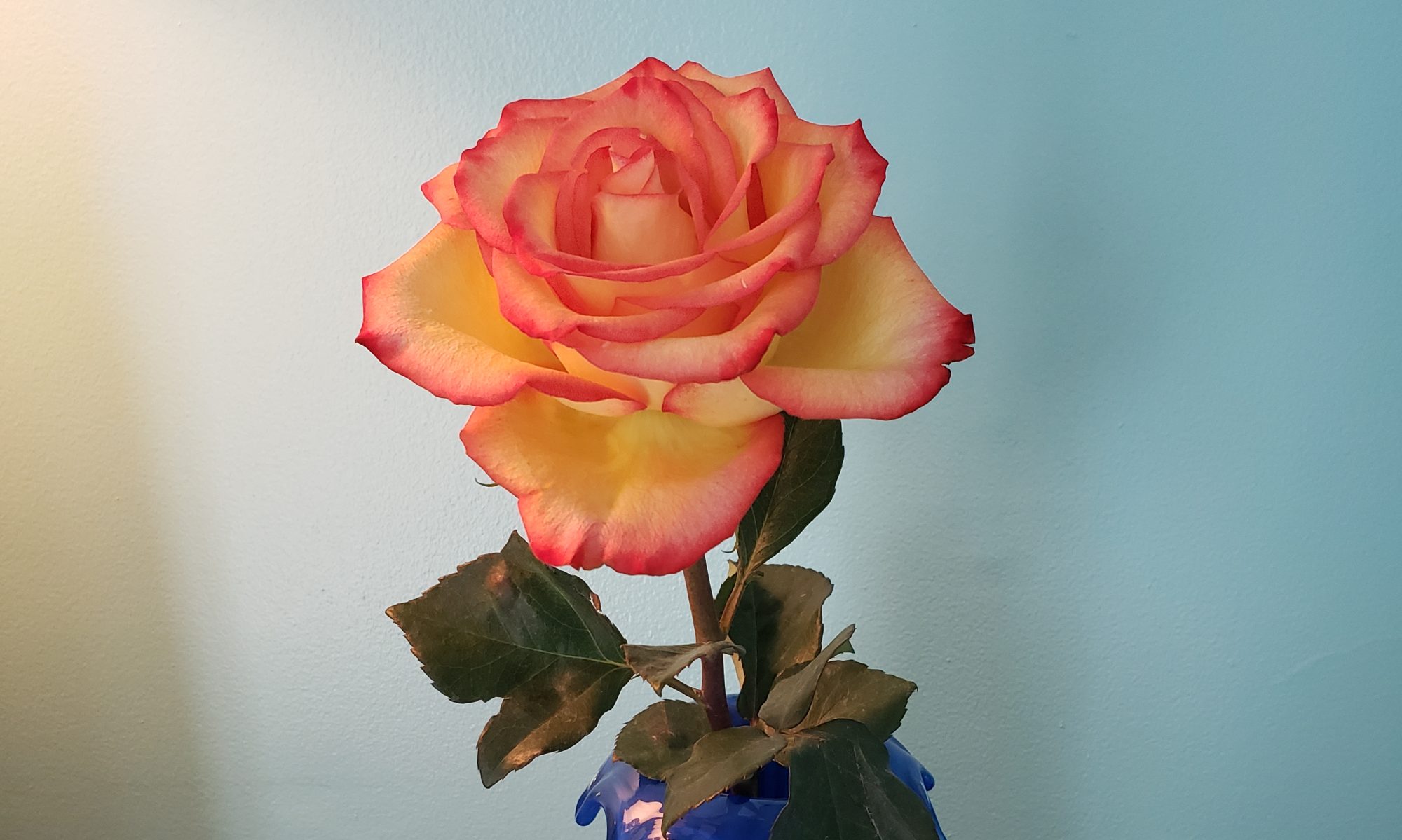
Ten pounds of personality in a five-pound bag
I only learned about Judy Heumann today, when my friend told me about her passing. This sounds like a hell of a life.
Remember that none of the rights we have should be taken for granted.
Post by Soph J Butler about same.
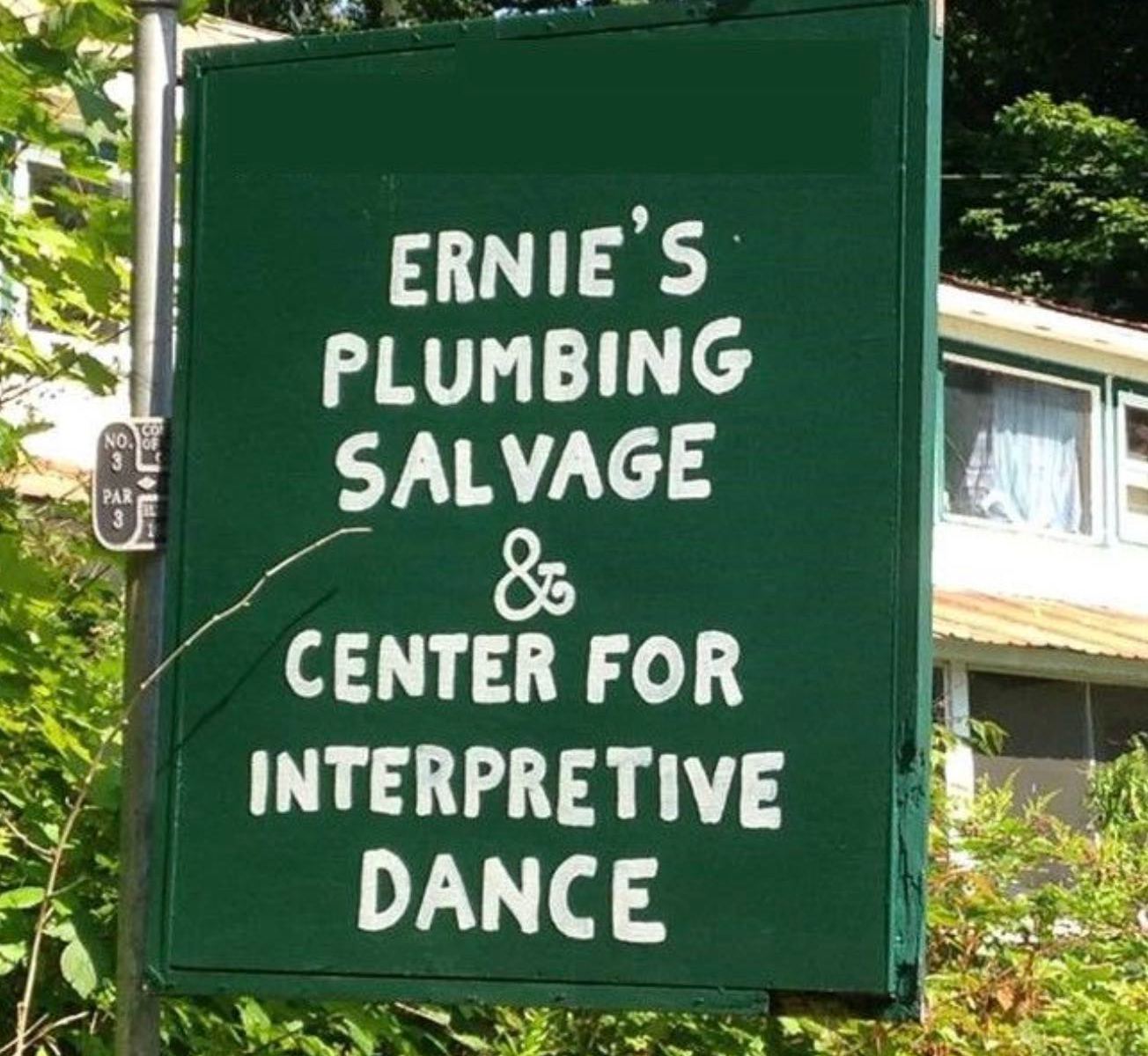
Honestly, I think this sign is a perfect illustration of Vocation and Avocation! Like, there’s a whole sermon in just one image.
Not every activity or skill has value under capitalism, but that doesn’t mean it doesn’t *have value*! We can and should do both kinds of things. (And we should have time to do both. 8 hours of rest, 8 hours of work, 8 hours for what we will.)
I saw this comic today, and just wanted to share.
Recently, via this Ask Historians reddit thread, I discovered the term Hallucination in the context of Artificial Intelligence.
I’ve known about this concept for a while; neural-net machine translation will often produce “better English,” at the cost of…yanno….accuracy. But all anyone ever sees is how clear and not-clunky the English sentence is! They ooh and aah over how magical the new tech is; but the problem of “did this actually translate CORRECTLY” has not gone away with the new technology. It’s still as present as it ever was. And the pretty English outputs make us more likely to trust the imperfect tech; the old “your purple cabbage grandmother” outputs gave us an appropriate amount of distrust for the machine.
That’s a suitable analogy for the rest of AI. It can be pretty. It’s not bad. But don’t think of it as the same kind of reliable as human-produced content; it’s not even the same kind of unreliable as human-produced content. That’s the part that worries me most.
April 2023: Found this TikTok about spaghetti photos and how they’re likely shaped by the biased data (the only photos going into the engine are likely of toddlers making a cute mess). As she says, “AI is an Ask The Audience robot, and the Audience is the general Internet-using public.”
Years ago, I read this essay on the Atlantic about people who overtly prioritize their platonic friendships over their romantic partnerships.
I no longer have access to read it, but it was in my browser tabs, and I still think about it occasionally.
As a person who is intentionally solo (no cohabitant) at this stage of my life, I’m trying to mainly strengthen my friendships; even if some of those are also romantic or sexual, my overarching goal is to just build up my connections with the people who are in my life. And I don’t need to be fucking them, or living with them, to do that.
Something I reference a lot is the essay from a few years back: the Geek Social Fallacies.
My personal demon is #4 (Friendship is Transitive), but I’ve seen all of them at play in my social groups, so it’s good to remember them periodically.
This tweet resonated pretty hard with me today.
https://twitter.com/sesmith/status/1622296174777729026?s=20&t=Qg-VB8q-Qoj–W1k8G-H0w
I hadn’t ever thought of it in these exact words, but this is basically how I frame my decisions about what to buy.
The phrasing I’ve used in the past is: Yes, I can afford this; but I shouldn’t afford it. (I think I may have heard my parents say that once but I’m not positive.) This attitude has served me well as I transition to a lower household income than what I had before: I’m putting off a lot of household furniture purchases and so forth, because I don’t want to find myself in a position where I am spending money on credit card interest. (That does not spark joy.) Some interest is unavoidable; emergencies happen, mistakes happen, etc. But anything I can do to minimize that helps me feel more comfortable and secure in my life now.
And the positive ethical implications of lower overall consumption are just the icing on the cake.

A friend of mine shared this link with me, and I’m really appreciating it right now.
I’m always looking for new ways of thinking about money, and this post highlights one of my own weaknesses: I always tend to go for a mathematical solution, rather than looking at the root emotional causes of what I’m doing. So thinking about what it is I want to be able to do with my money is an important thing for me to step back and contemplate.
Along with that, though, her second point about creating a Descriptive Budget first is something I already love. The first step (or, in her list here, the second step) to taking control of your money is knowing where it all is going.
Steps 3 and 4, emergency fund and employer matching, are also good; though from the title I had expected 4 to be about Lifecycle funds. But I guess that comes later!
Step 5 is interesting. She calls it “pay off then highest interest rates first,” but also talks about the snowball method (pay off lowest balances first). Fortunately, those two things often run together – a credit card balance is likely to be smaller than a car, house, or student loan, and it’s likely to have the lowest rate. So that makes sense.
Steps 6 and 7 are emergency fund and retirement, again. I approve. Then step 9 is about aggressively paying off debts. I like that this comes after establishing baseline financial security first; debt is not a great thing to have, especially if it has high interest, but it’s not evil.
Steps 8 and 10 relate back to Step 1: thinking about what you want again, and then making it happen. Most things in the world come with a concrete price that you can look at and save up for, even if that price is not immediately visible. And prioritizing your dreams and placing them within the context of what you want to do is a great way to make them much more accessible.
In short: I like this financial writer!
A friend asked this question today, and here’s my answer to him:
Ishmael, The Story of B, Demian, and The Mists of Avalon
All at age 15
They broke the Church’s influence over my mind and began a decade long process of losing my faith.
I recently had the delight of discovering this dichotomy in humans: are you a Chaos Muppet or an Order Muppet, and are you yoked to someone like you or someone different from you?
I first heard of it in this Reddit post: https://www.reddit.com/r/AskWomenOver30/comments/zivdeq/does_your_partner_do_this_not_sure_what_to_call_it/?utm_source=share&utm_medium=android_app&utm_name=androidcss&utm_term=1&utm_content=share_button
And here’s the original essay on Slate: https://slate.com/human-interest/2012/06/chaos-theory.html
My toxic trait (as the kids these days say) is that I’m a chaos Muppet who aspires to be an order Muppet. This can sometimes lead to tears.
Frog is an Order Muppet; Toad is a Chaos Muppet.
 Emilybook